






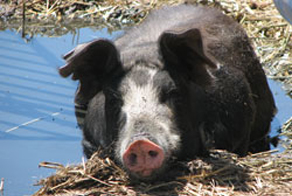
Pig in a Pen
Hog Time: Raising Pigs
It was the third Hog Farm we had visited. They had us wear plastic disposable boots over our shoes to prevent any diseases from coming on the farm. It was the cleanest and most organized hog farm. The setting was outdoors and they had several Guinea Hens around to keep the fly population down. Even though I enjoyed seeing the different award-winning hogs, I was still disappointed. I shared this with a friend. I told her in a dreamy tone that I wanted to see pigs running around on green pastures. To which she laughed and said I was not going to find that dream on earth.
We brought three Berkshire cross piglets home that day. We started out feeding them bagged corn and table scraps. It was our hope that if we raised our pigs to butcher right before the heat of summer, it would keep down on the fly population.
Grass Fed Pork
"Grass fed pork" kept lingering on my mind so I decided to see if the pigs would eat the alfalfa hay since grass was an unlikely find this time of year in the Southwest. To my surprise, they liked it, so we changed their diet to hay and table scraps. This process reduced the smell and we were not having fly problems. The flip part of our plan caused them to grow very, very slowly. I was determined to keep them on this diet, convinced that we were going to have nutritious pork for the family.
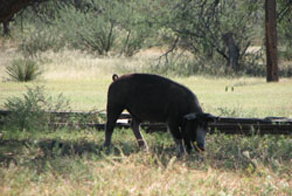 The typical rendering time was upon us and the pigs were nowhere near butchering size. We waited and before we knew it, it was monsoon season. The pasture began to green up as it does this time of year, and we stopped feeding hay to the livestock, as they were happy to graze all day.
We finished the field fencing around five of our acres and began to let the pigs out. Again, being a city person, I was shocked to see the pigs eating grasses, tree cuttings, and weeds. I began testing our plan by letting them out to pasture and not giving them their daily hay.
Every evening they would come waddling back to their pen with round, happy bellies. The smell totally disappeared.
They eventually got bigger. By the end of Monsoon Season, they were ready to go. It took 10 months, 3 months longer than the normal. If "Grass Fed Beef" is best when the animal is eating freshly growing grasses, then our "Grass Fed Pork" ranks high on the nutritional scale.
Shelly
December 2008
Partners
Resources
www.greenhomebuilding.com/adobe.htm
www.earthbagbuilding.com/articles.htm
www.earthbagplans.wordpress.com
We moved from the city to the country in 2005. Since then, we have been building structures, raising livestock and growing some of our own foods. We are crazy about family, nutrition and want the best for our growing family.
